
NVR vs DVR: Installation Differences
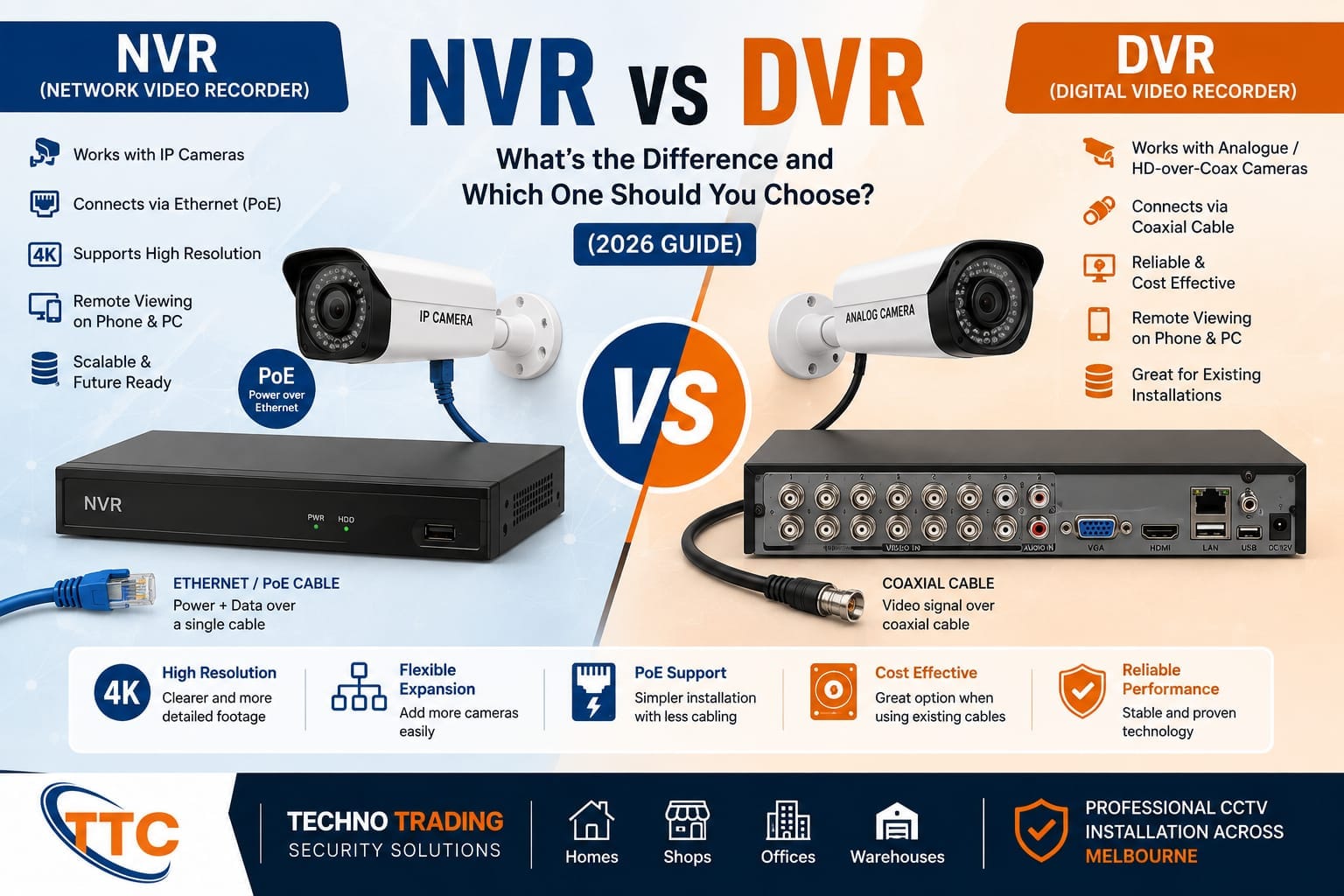
NVR and DVR systems also differ in the way cameras are connected.
NVR systems commonly use Ethernet cabling with IP cameras. With compatible PoE equipment, the same cable can carry both power and data, which can simplify installation.
DVR systems generally use coaxial cabling for video and require a separate power connection for the cameras.
If a property already has suitable coaxial cabling, upgrading to a compatible DVR system may be more practical than replacing all existing cables.
NVR vs DVR: Key Differences
NVR and DVR systems both record security camera footage, but they differ in how they connect to cameras and process video.
NVR (Network Video Recorder) works with IP cameras, typically using Ethernet cables. It offers flexible installation and supports many modern smart detection features.
DVR (Digital Video Recorder) generally works with analogue cameras connected through coaxial cables. It can be a practical choice for properties with existing coaxial wiring.
The main differences between NVR and DVR include camera compatibility, cabling, video processing, installation flexibility and available smart features.
Does NVR or DVR Provide Better Video Quality?
Video quality depends on the cameras and equipment being used, not simply whether the recorder is an NVR or DVR.
Modern NVR systems can support high-resolution IP cameras, making them popular for new installations where detailed footage is required.
Modern DVR systems can also support high-resolution HD-over-coax cameras.
When choosing a system, camera resolution, sensor quality, lens, lighting conditions and recording settings should all be considered.
What About Smart Detection Features?
Modern security systems may provide intelligent features such as human detection, vehicle detection, motion alerts and active deterrence.
These capabilities depend on the specific cameras and recorder.
NVR systems are commonly paired with modern IP cameras that offer advanced analytics, but you should always check the specifications of the individual equipment rather than assuming every NVR supports the same features.
Can NVR and DVR Work Without Internet?
Yes. Many NVR and DVR systems can continue recording footage locally without an active internet connection.
Internet access is generally required for features such as remote viewing, mobile notifications and some cloud-based services.
If the internet connection goes down but the cameras, recorder and local network remain powered and correctly connected, local recording can normally continue.
For more information, read our guide Do Security Cameras Work Without Internet?
Should You Replace an Existing DVR With an NVR?
Not necessarily.
If your existing DVR system and coaxial cabling are in good condition and meet your security requirements, replacing everything simply because NVR technology is newer may not provide enough benefit to justify the cost.
However, upgrading to an NVR may make sense if you want to move to IP cameras, require different smart features or are planning a larger CCTV system.
The existing infrastructure should be assessed before deciding.
Choosing the Right Recorder for Your Property
Before choosing between an NVR and DVR, consider:
Whether you already have CCTV cabling
Number of cameras required
Camera resolution
Night vision requirements
Smart detection features
Recording storage requirements
Remote viewing requirements
Future expansion plans
A properly designed system should meet the actual security requirements of the property rather than simply using the newest equipment available.
Professional CCTV Installation in Melbourne
Techno Trading provides CCTV solutions for homes and businesses across Melbourne.
We can help assess your property, existing cabling, required camera locations and recording requirements to determine which type of CCTV system is suitable.
Whether you are installing a new IP camera system or upgrading existing security equipment, choosing the correct recorder and cameras from the beginning can make the system more reliable and easier to use.
For more information, visit our CCTV Installation page or Contact Techno Trading to discuss your security requirements.
Conclusion
The main difference between NVR and DVR is how they work with cameras and process video.
NVR systems are primarily designed for IP cameras and commonly use Ethernet networking, while DVR systems are typically designed for analogue or HD-over-coax cameras.
For many new CCTV installations, an NVR system offers greater flexibility. However, DVR systems can remain a practical choice when suitable coaxial infrastructure is already installed.
The right choice between NVR vs DVR depends on your property, existing cabling, required features, storage requirements and future plans.
Frequently Asked Questions
What does NVR stand for?
NVR stands for Network Video Recorder. It is primarily used to record video from IP security cameras over a network.
What does DVR stand for?
DVR stands for Digital Video Recorder. It is commonly used with analogue or HD-over-coax security cameras.
Is NVR better than DVR?
Neither is automatically better in every situation. NVR systems are often preferred for new IP camera installations, while DVR systems can be practical when compatible coaxial cabling already exists.
Does an NVR need internet to record?
Generally, no. A correctly configured NVR can record compatible cameras locally without continuous internet access. Internet is mainly required for remote and online features.
Can I view an NVR or DVR from my phone?
Many modern systems support mobile remote viewing when the recorder is connected to the internet and correctly configured.
Can I use IP cameras with a DVR?
Traditional DVR systems are primarily designed for analogue or HD-over-coax cameras. Some hybrid recorders support multiple camera technologies, so compatibility should always be checked for the specific recorder.
Which is better for a new CCTV installation?
For many new installations, an NVR with IP cameras provides greater flexibility and access to modern camera technologies. However, the best system depends on the individual property and requirements.