
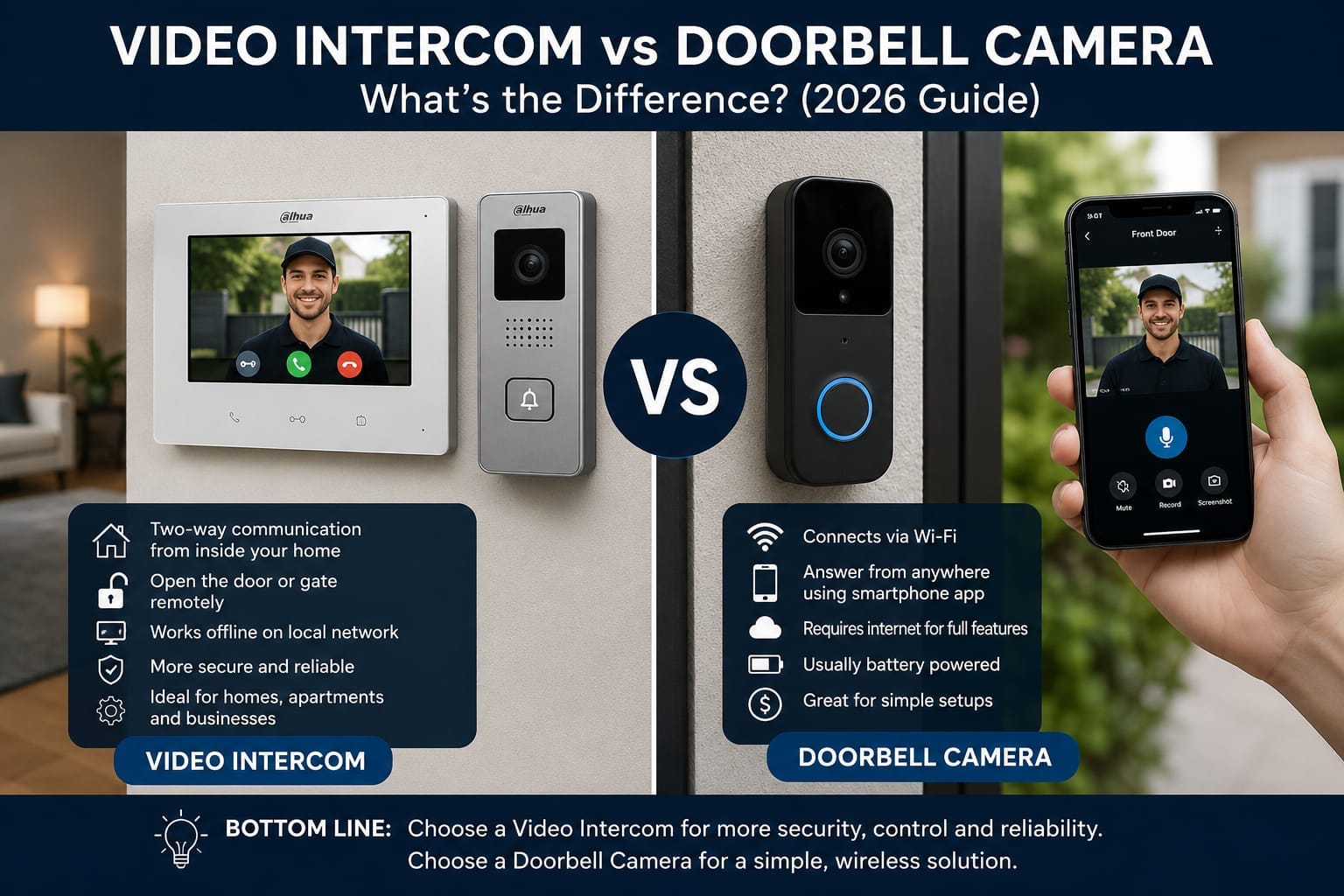
Video Intercom vs Doorbell Camera: What’s the Difference? (2026 Guide)
Choosing between a video intercom and a doorbell camera can be confusing because both devices allow you to see and communicate with visitors at your door. However, they are designed for different purposes and can provide very different levels of access control, convenience and security.
A doorbell camera is generally designed as a simple way to monitor your front door and communicate with visitors through a smartphone. A video intercom system can provide a more complete communication and access solution, often including an indoor monitor and the ability to unlock a door or gate.
Understanding the differences between a video intercom vs doorbell camera can help you choose the right system for your home, apartment or business.
What Is a Video Intercom?
A video intercom is a communication and access system that allows people inside a property to see and speak with visitors before allowing them to enter.
A typical video intercom system includes an outdoor station with a camera, microphone and call button, together with an indoor monitor.
Depending on the system, users may also be able to unlock an electric door or gate directly from the indoor monitor or a compatible mobile application.
Modern IP video intercom systems may also support features such as mobile notifications, remote answering, multiple indoor monitors and integration with other security or access control equipment.
What Is a Doorbell Camera?
A doorbell camera is a compact security device installed near the entrance of a property.
When someone approaches the door or presses the button, the device can send a notification to a connected smartphone. The user can then view the visitor and communicate using two-way audio.
Many modern doorbell cameras also provide features such as motion detection, recorded video, night vision and remote viewing.
Depending on the model, footage may be stored locally or through a cloud service. Some cloud-based features may require an ongoing subscription.
Video Intercom vs Doorbell Camera: Key Differences
Although the two devices share several features, their main purpose is different.
A doorbell camera is primarily designed for convenient front-door monitoring and smartphone communication.
A video intercom is generally designed as a more complete entry communication and access solution.
The main differences usually include the type of indoor equipment, door or gate control, installation method, network requirements and integration possibilities.
Indoor Monitor
One of the most obvious differences is the indoor monitor.
Traditional and modern video intercom systems commonly include a dedicated indoor screen. When a visitor presses the outdoor call button, the person inside can answer directly from the monitor.
This can be particularly useful in homes where not everyone wants to depend on a smartphone.
Many doorbell cameras, on the other hand, are primarily designed to work through a mobile application. Some models can connect to additional displays or smart home devices, but this depends on the manufacturer.
Door and Gate Unlocking
Access control is another important difference.
Many video intercom systems can be connected to an electric strike, magnetic lock or compatible gate controller. This allows an authorised person to communicate with a visitor and then release the door or gate.
This makes video intercom systems particularly useful for apartments, offices, gated properties and commercial buildings.
Doorbell cameras are generally focused on monitoring and communication. Some models may integrate with compatible smart locks, but this functionality depends on the individual products and ecosystem.
Installation Differences
Installation requirements can vary significantly.
A video intercom may require cabling between the outdoor station, indoor monitor, network equipment and door or gate control system.
Modern IP intercom systems may use Ethernet and PoE, while other systems can use two-wire or manufacturer-specific connections.
Doorbell cameras are often designed for simpler residential installations. Depending on the model, they may operate using rechargeable batteries or an existing doorbell power supply.
However, a simple installation does not automatically mean it is the best solution. The correct choice depends on the property and what you want the system to do.
Internet and Wi-Fi Requirements
Many Wi-Fi doorbell cameras depend heavily on an internet connection for remote notifications, smartphone access and cloud-based services.
If the internet connection is unavailable, some online features may temporarily stop working.
Video intercom systems vary considerably.
Some IP intercom systems can provide communication between compatible indoor and outdoor stations over the local network, while internet access may only be required for remote smartphone features.
The exact functionality without internet depends on the equipment and system configuration.
Which Is More Reliable?
Reliability depends on the quality of the equipment, network connection, power supply and installation.
A properly installed wired video intercom can provide a stable solution because communication between system components does not necessarily depend entirely on Wi-Fi.
Wireless doorbell cameras can be convenient, but their performance may be affected by Wi-Fi coverage, network congestion, battery condition or internet availability.
For properties where reliable entry communication is particularly important, the network and power design should be considered before selecting the equipment.
Security Features
Both video intercoms and doorbell cameras can improve awareness around the entrance of a property.
Depending on the model, available features may include:
Live video viewing
Two-way audio
Motion detection
Night vision
Mobile notifications
Video recording
Visitor snapshots
Remote access
Video intercom systems may additionally support door release, multiple entrances, multiple indoor monitors and integration with access control systems.
It is important to check the specifications of the individual product rather than assuming every device includes the same features.
Recording and Storage
Recording options vary between manufacturers.
Some doorbell cameras record footage to cloud storage, which may require a subscription. Others support local storage through a memory card, hub or compatible recorder.
Video intercom systems may also support different storage methods. Depending on the system, recordings or snapshots may be stored on an indoor monitor, memory card, network recorder or other compatible equipment.
Before purchasing either system, check how footage is stored and whether ongoing subscription fees are required.
Which Is Better for a House?
For a typical house, the right choice depends on what the homeowner wants to achieve.
If the main requirement is receiving notifications and speaking with delivery drivers or visitors through a smartphone, a doorbell camera may be sufficient.
If the homeowner wants a dedicated indoor monitor, reliable communication and the ability to unlock a front door or gate, a video intercom may be the better solution.
Properties with automated gates can particularly benefit from a properly designed intercom system.
Which Is Better for Apartments?
Video intercom systems are commonly used in apartment buildings because they can provide communication between a building entrance and individual apartments.
Residents can identify visitors before allowing them access to the building.
Depending on the system design, multiple apartments can be connected to one or more entrance stations.
A standalone doorbell camera generally does not provide the same type of building-wide access management.
Which Is Better for Businesses?
For many businesses, a video intercom is the more practical solution.
Offices, warehouses, shops and commercial buildings may need controlled access rather than simply receiving a notification when someone arrives.
A video intercom can allow staff to identify visitors and control access without physically walking to the entrance.
For larger commercial properties, the intercom may also form part of a broader access control and security system.
Can a Video Intercom Connect to a Smartphone?
Yes, many modern video intercom systems support compatible mobile applications.
Depending on the equipment, users may be able to receive calls, view visitors, communicate through two-way audio and remotely release a connected door or gate.
However, mobile functionality varies between manufacturers and models, so compatibility should always be confirmed before purchasing a system.
Do Video Intercoms Require a Subscription?
Not necessarily.
Many video intercom systems can operate without a monthly subscription for their basic local functions.
However, certain manufacturers may offer cloud storage, remote services or additional features that require subscription fees.
Always check the ongoing costs before selecting equipment.
Do Doorbell Cameras Require a Subscription?
Some do and some do not.
Many doorbell cameras provide basic live viewing and notifications without a subscription, while recorded cloud footage or advanced detection features may require a paid plan.
Other models provide local storage options.
The purchase price therefore should not be the only cost considered when comparing systems.
Video Intercom vs Doorbell Camera: Which Should You Choose?
Choose based on what you actually need rather than simply selecting the newest device.
A doorbell camera may be suitable if you want a relatively simple way to see visitors and communicate through your smartphone.
A video intercom may be more suitable if you want an indoor monitor, door or gate release, multiple entry points or integration with a broader access control system.
For new homes and renovations, planning the cabling before construction is completed can also provide more options when selecting an intercom system.
Professional Video Intercom Installation in Melbourne
Choosing the correct video intercom depends on the property, entrance configuration, existing cabling and required features.
Techno Trading provides video intercom solutions for residential and commercial properties across Melbourne.
We can assess the property and help determine suitable equipment based on requirements such as indoor monitoring, mobile access, door release, gate control and system expansion.
Professional installation can also help ensure that the outdoor station, indoor monitor, network connection and access equipment are correctly configured.
Conclusion
Video intercoms and doorbell cameras both allow users to see and communicate with visitors, but they are not the same type of system.
Doorbell cameras are generally designed as convenient front-door monitoring devices with strong smartphone integration.
Video intercom systems provide a more complete entry communication solution and may include dedicated indoor monitors, door or gate release and integration with access control equipment.
When comparing a video intercom vs doorbell camera, consider the property type, internet connection, existing cabling, access requirements, recording options and whether you need an indoor monitor.
The best system is the one that provides the functions your property actually requires.
Frequently Asked Questions
What is the main difference between a video intercom and a doorbell camera?
A doorbell camera is primarily designed for front-door monitoring and smartphone communication, while a video intercom can provide dedicated indoor communication and access control features such as door or gate release.
Can a video intercom work without internet?
Some video intercom systems can continue providing local communication between compatible indoor and outdoor stations without internet access. Internet may still be required for remote smartphone functions.
Can a video intercom open a gate?
Many video intercom systems can be connected to compatible gate controllers or access equipment, allowing users to release the gate after identifying a visitor.
Is a video intercom better than a doorbell camera?
Not in every situation. A doorbell camera may be sufficient for simple residential monitoring, while a video intercom is generally more suitable when dedicated indoor communication or access control is required.
Can I use both a doorbell camera and a video intercom?
Yes. Technically, both systems can be used at the same property, although in many cases a properly selected video intercom may already provide the required entrance monitoring and communication features.