
Can You Install a Smart Lock on Any Door? (2026 Guide)
Can you install a smart lock on any door? Not always. While many smart locks can be installed on timber, aluminium and security doors, compatibility depends on door thickness, existing lock type, mortise size and available installation space. This guide explains what Australian homeowners should check before choosing a smart lock.
The short answer is no. While smart locks can be installed on many residential and commercial doors, not every smart lock is compatible with every door.
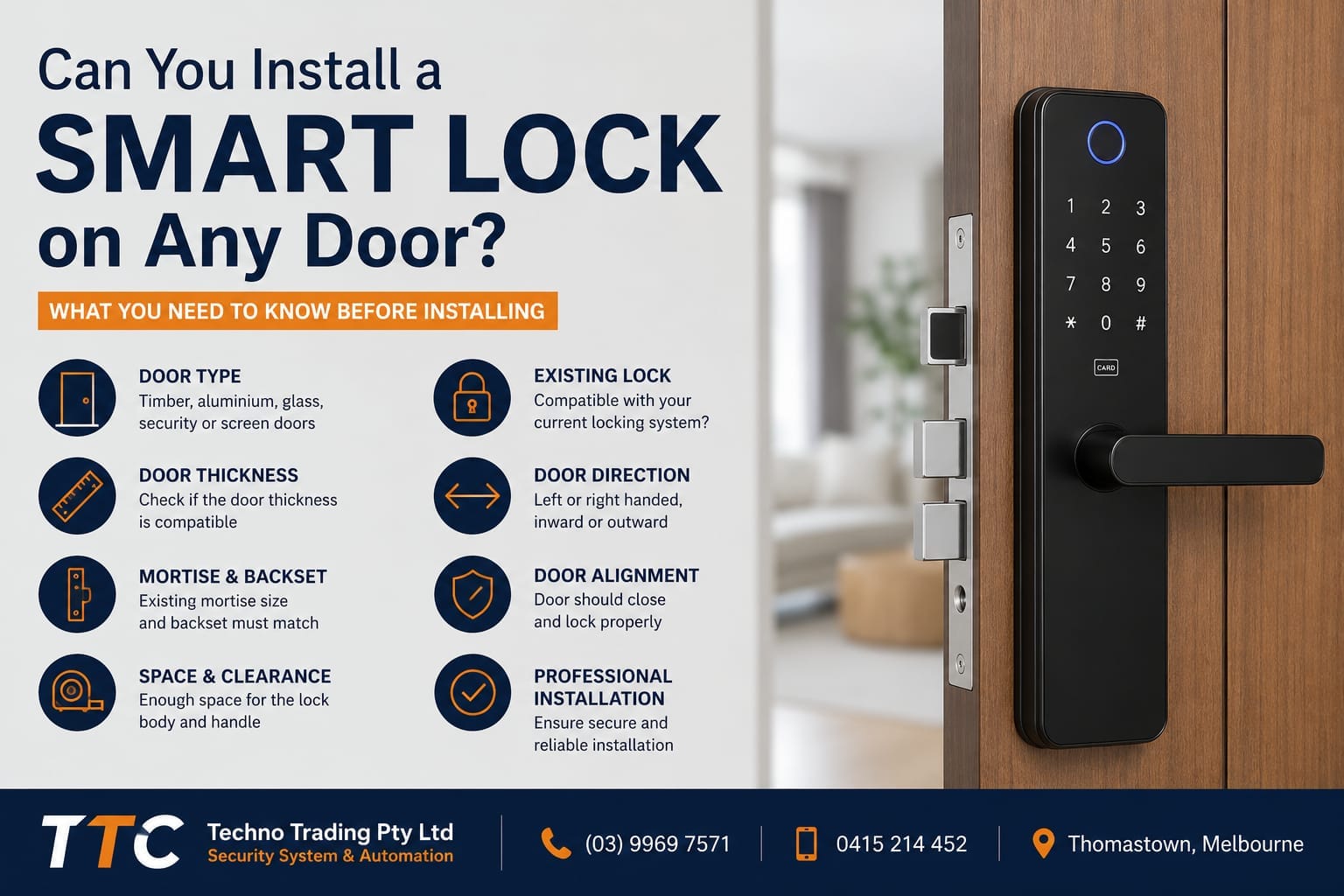
Door material, thickness, existing lock type, mortise size, backset, available space and even the direction the door opens can affect compatibility.
In this guide, we explain what you should check before installing a smart lock and which types of doors may require extra consideration.
Can You Install a Smart Lock on Any Door?
You cannot assume that a smart lock will fit simply because it physically looks suitable for your door.
Different smart locks are designed for different locking mechanisms and door specifications. A lock that works perfectly on one timber entrance door may not be suitable for another door with a different mortise or frame configuration.
Before installation, it is important to check both the door itself and the existing locking system.
This is especially important when purchasing larger smart locks with integrated handles, fingerprint readers, cameras or other features.
What Should You Check Before Installing a Smart Lock?
Several measurements and specifications should be checked before selecting a smart lock.
1. Door Thickness
Smart locks normally have a specified range of compatible door thicknesses.
If the door is too thin or too thick, the front and rear sections of the lock may not connect correctly through the door.
For example, some smart locks may be designed for doors around 40–110 mm thick, while other models have different requirements.
Never assume the thickness is suitable. Measure the door and compare it with the specifications of the exact smart lock model.
2. Existing Lock Type
The existing locking mechanism is one of the most important compatibility factors.
Australian doors can use different types of locks, including:
Mortise locks
Deadbolts
Entrance locksets
Narrow-profile locks
Multi-point locking systems
Some smart locks replace most of the existing locking hardware, while retrofit models may work with part of the existing mechanism.
The correct approach depends on both the door and the smart lock design.
3. Mortise Size
Many full-size smart locks use a mortise installed inside the edge of the door.
The mortise contains the mechanical locking components, including the latch and locking bolts.
Different smart locks can use different mortise dimensions. If the new mortise is significantly different from the existing one, the door may require modification.
This is one reason why choosing a smart lock based only on appearance or features can cause problems during installation.
4. Backset
The backset is the distance from the edge of the door to the centre of the main lock or handle mechanism.
It affects where the smart lock sits on the door.
If the required backset is incompatible with the door or existing cut-outs, additional modification may be required, or the selected smart lock may simply not be suitable.
Checking the backset before purchasing can prevent unnecessary installation problems.
5. Space Around the Lock
Modern smart locks can be considerably larger than traditional door locks.
A model with a large handle, display, camera, fingerprint reader or palm-recognition sensor needs sufficient clearance around the lock area.
Decorative mouldings, glass panels or a narrow door frame can sometimes prevent the lock body from sitting correctly against the door.
The internal side also needs enough clearance for the rear lock body, handle and battery compartment.
Can You Put a Smart Lock on a Security Door?
Yes, you can put a smart lock on some security doors, but compatibility depends on the door and existing lock. Security doors can have different thicknesses, frames and locking mechanisms, so the smart lock must be suitable for the specific door. Before choosing a smart lock, check the door thickness, lock type and available installation space.
Can Smart Locks Be Installed on Timber Doors?
In many cases, yes.
Timber entrance doors are generally among the most straightforward doors for smart lock installation because they can often be modified to accommodate the required mortise and mounting holes.
However, that does not mean every smart lock automatically fits every timber door.
The installer still needs to check:
Door thickness
Existing lock position
Mortise dimensions
Backset
Door frame
Clearance around the lock
The condition of the door also matters. A damaged, badly aligned or deteriorated door should be addressed before installing a new locking system.
Can Smart Locks Be Installed on Aluminium Doors?
Sometimes, but compatibility needs to be checked carefully.
Aluminium doors often have narrower profiles than timber entrance doors. This means there may be limited internal space for a large mortise or full-size smart lock body.
Some aluminium doors require locks specifically designed for narrow profiles.
Before purchasing a smart lock for an aluminium door, measurements are particularly important. Choosing a large residential smart lock without checking the available width can result in a lock that simply cannot be installed correctly.
What About Glass Doors?
Glass doors require much more care.
A conventional smart lock designed to be mounted through a timber door should not simply be fitted to glass.
Drilling or modifying glass can create serious problems, particularly when dealing with toughened safety glass.
Glass-door access usually requires hardware specifically designed for that type of door and installation.
If you have a glass entrance, choose the locking solution based on the door construction rather than trying to adapt a standard smart lock.
Can You Install a Smart Lock on a Security Screen Door?
This depends heavily on the design of the security door.
Security screen doors often have narrow metal frames and specialised locking mechanisms. Some also use multi-point locking systems.
A standard full-size smart lock designed for a timber entrance door may therefore not be suitable.
Before purchasing a smart lock for a security screen door, the frame dimensions and existing locking mechanism should be checked.
Can a Smart Lock Work With a Multi-Point Lock?
This is another area where you should not assume compatibility.
Multi-point locks secure a door at several points, often along the top, middle and bottom of the door.
A conventional smart lock designed around a standard single-point mortise may not operate the existing multi-point mechanism correctly.
There are smart locking solutions designed for certain multi-point systems, but compatibility depends on the exact hardware.
Replacing a multi-point lock with an incompatible smart lock can also reduce the functionality of the original door hardware.
Does the Direction the Door Opens Matter?
It can.
Doors may be left-handed or right-handed and can open inward or outward.
Some smart locks can be configured for different opening directions, while others have specific installation requirements.
The handle orientation and latch direction may also need adjustment during installation.
This should be confirmed before fitting the lock rather than discovered halfway through the installation.
What if the Existing Holes Don’t Match?
This is common when replacing a traditional lock with a larger smart lock.
Depending on the door and selected lock, new holes or mortise modifications may be required.
Old openings may also need to be covered by the new lock body or repaired appropriately.
However, excessive modification is not always a good solution.
If installing a particular smart lock requires major structural changes to the door, choosing a more compatible model may be the better option.
Can You Install a Smart Lock on an Existing Door?
Yes, many smart locks are installed on existing doors rather than new ones.
The key question is not whether the door is new or old. It is whether the door’s construction and dimensions are compatible with the selected lock.
An existing door should also close and latch properly before installation.
A smart lock cannot compensate for a badly aligned door.
If you currently need to push, lift or pull the door forcefully to operate the existing lock, the alignment problem should be corrected.
Why Door Alignment Matters
A smart lock contains electronic components, but the actual locking mechanism is still mechanical.
When the door closes, the latch and locking bolts need to line up correctly with the strike plate in the frame.
If they do not, the motor may have difficulty locking or unlocking the door.
Repeated resistance can lead to unreliable operation and unnecessary strain on the mechanism.
Good installation therefore involves more than simply attaching the smart lock to the door.
Should You Buy the Smart Lock Before Checking the Door?
Ideally, no.
One of the most common mistakes is choosing a smart lock entirely based on features and appearance and checking compatibility afterwards.
A lock might offer fingerprint access, PIN codes, NFC, mobile control and a built-in camera, but none of those features matter if the hardware does not fit the door correctly.
Before purchasing, check:
Door material
Door thickness
Existing lock
Mortise dimensions
Backset
Locking mechanism
Available mounting space
Opening direction
Photos of the existing lock and measurements of the door can also help determine compatibility.
Retrofit Smart Locks vs Full Smart Locks
Not all smart locks require the same installation method.
Some retrofit smart locks are designed to operate with parts of an existing locking system. These can require fewer modifications in compatible installations.
Full smart locks generally replace more of the original lock hardware and may include an integrated handle, mortise, keypad, fingerprint reader and other components.
Neither design is automatically better for every property.
The best option depends on the existing door and what functions the user requires.
Can a Smart Lock Damage Your Door?
A correctly selected and professionally installed smart lock should not unnecessarily damage a suitable door.
Problems are more likely when an incompatible lock is forced onto a door or when holes and mortise cuts are made without accurate measurements.
Once significant modifications have been made, returning to the original lock may also require repair work.
For that reason, compatibility should be confirmed before the door is modified.
Professional Smart Lock Installation in Melbourne
Techno Trading provides smart lock solutions and professional installation for homes and businesses across Melbourne.
Before installation, the door and existing locking mechanism can be checked to determine whether the selected smart lock is suitable.
Different properties require different solutions, so selecting a compatible lock is just as important as choosing the features you want.
For smart lock enquiries, contact Techno Trading:
Phone: (03) 9969 7571
Mobile: 0415 214 452
Showroom: Thomastown, Melbourne
Conclusion
So, can you install a smart lock on any door?
Not always.
Smart locks can be installed on many doors, but compatibility depends on factors such as door material, thickness, mortise size, backset, existing locking mechanism, available space and door alignment.
Timber doors are often relatively straightforward, while aluminium, glass, security and multi-point locking doors may require more specialised solutions.
The safest approach is simple: check the door first and choose the smart lock second.
That can prevent buying the wrong lock, unnecessary modifications and installation problems later.
Frequently Asked Questions
Can I put a smart lock on my existing front door?
In many cases, yes. The existing door can often be fitted with a smart lock if its dimensions, construction and locking mechanism are compatible with the selected model.
Can you install a smart lock on any door without drilling?
No. Some retrofit models may require minimal modification, but many full smart locks require mounting holes and potentially modifications for the mortise.
Can a smart lock be installed on an aluminium door?
Yes, in some cases, but aluminium doors can have narrow profiles. The available width, existing lock and selected smart lock must be checked first.
Can you put a smart lock on a security screen door?
Possibly, but standard smart locks are not suitable for every security screen door. The frame and locking mechanism need to be checked for compatibility.
Does door thickness matter for a smart lock?
Yes. Every smart lock has physical installation requirements, and the door must fall within the supported thickness range of the particular model.
Can I install a smart lock if my door doesn’t close properly?
The alignment issue should be corrected first. A smart lock works best when the door closes smoothly and the latch and bolts align correctly with the frame.
One thought on “Can You Install a Smart Lock on Any Door? (2026 Guide)”